Types of Flanges and Their Applications
The commonly used types of flanges in industrial piping systems are as follows:
1. Socket Welded Flange (SW Flg.)
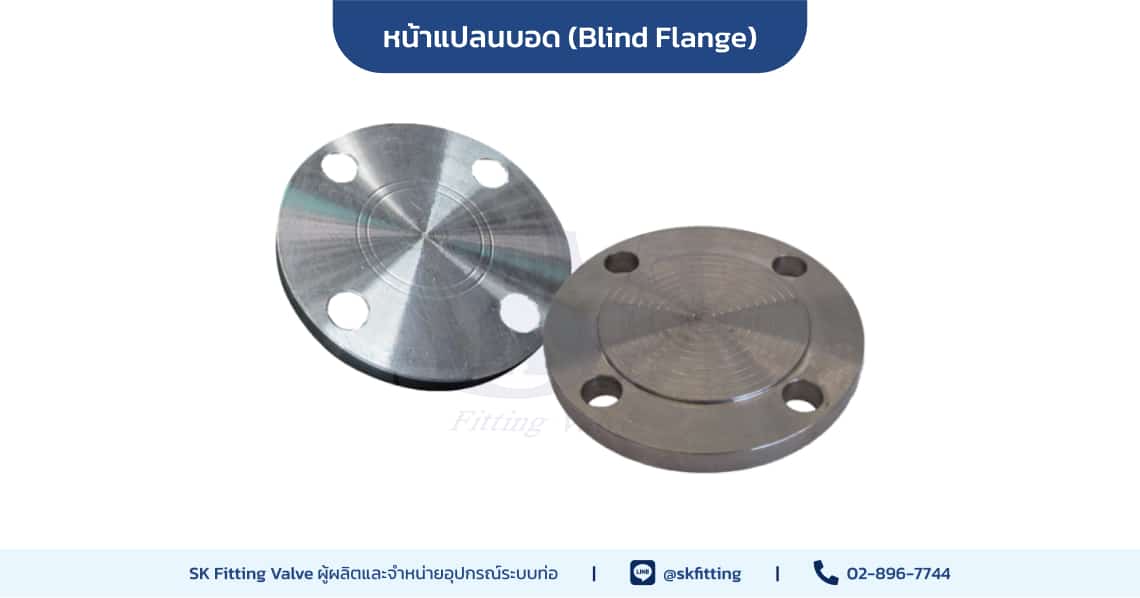
A socket welded flange has an internal bore with a recessed socket designed to receive the pipe. When connecting to the pipe, welding is performed only on the outside surface. The internal shoulder does not require welding. The external weld is typically a fillet weld, which means the weld integrity cannot be inspected using radiographic methods. This type of flange is commonly used for small pipe sizes. The socket thickness of the SW flange should match the pipe thickness. For example, a SCH 40 pipe should be used with a SCH 40 socket flange.
2. Slip-on Flange (SO Flg.)
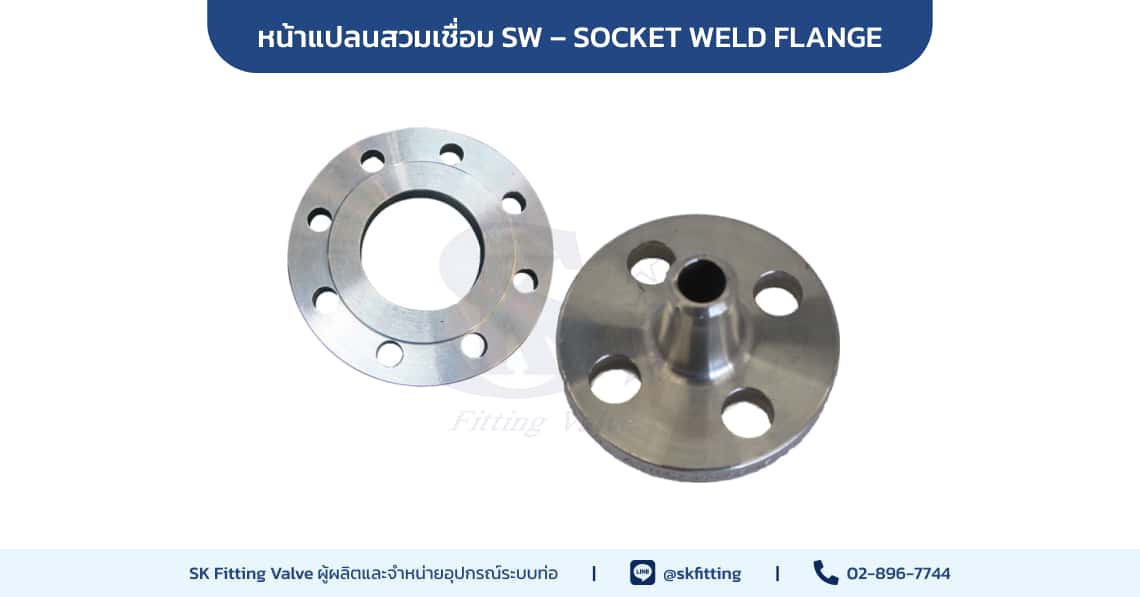
Slip-on flanges are similar to socket weld flanges, except that the internal bore does not have a shoulder. Therefore, when connecting a slip-on flange to a pipe, welding must be performed on both the outside and inside of the flange, while socket weld flanges require welding only on the outside.
This flange type is commonly used for large pipe sizes and is more popular than welding neck flanges because of its lower cost. In addition, the shorter hub length requires less installation space.
3. Threaded Flange (Screw Flange)
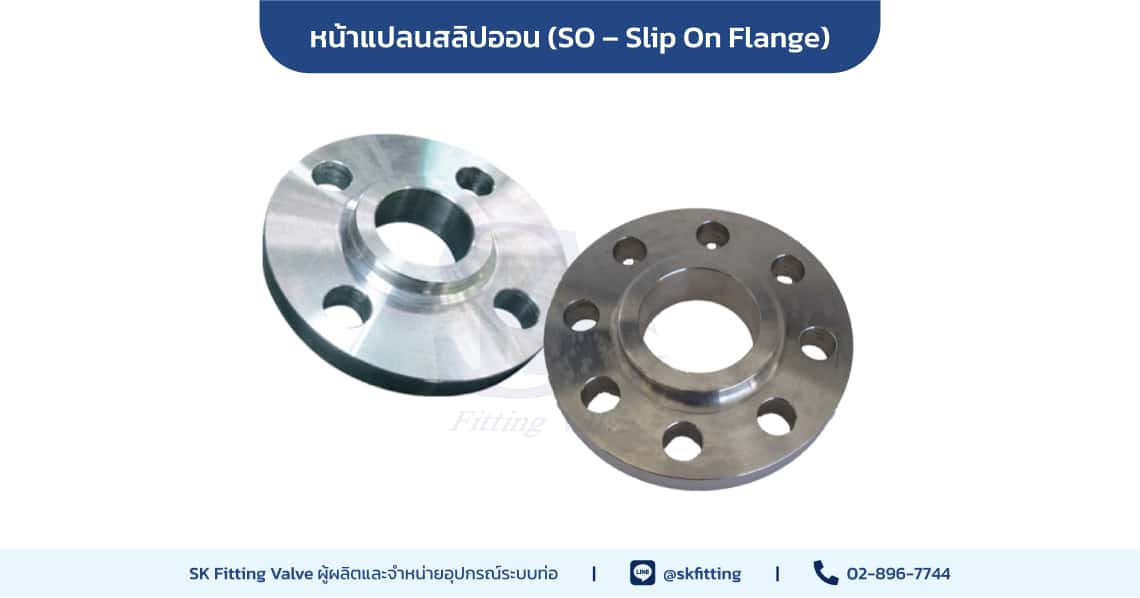
Threaded flanges have internal threads and are suitable for piping systems with low pressure and low temperature. Installation is simple because welding is not required. This allows convenient installation and makes them suitable for use in hazardous areas where welding may be unsafe.
Common pipe thread standards used in Thailand include BSP and NPT. SK Fitting Valve can supply flanges manufactured according to both standards.
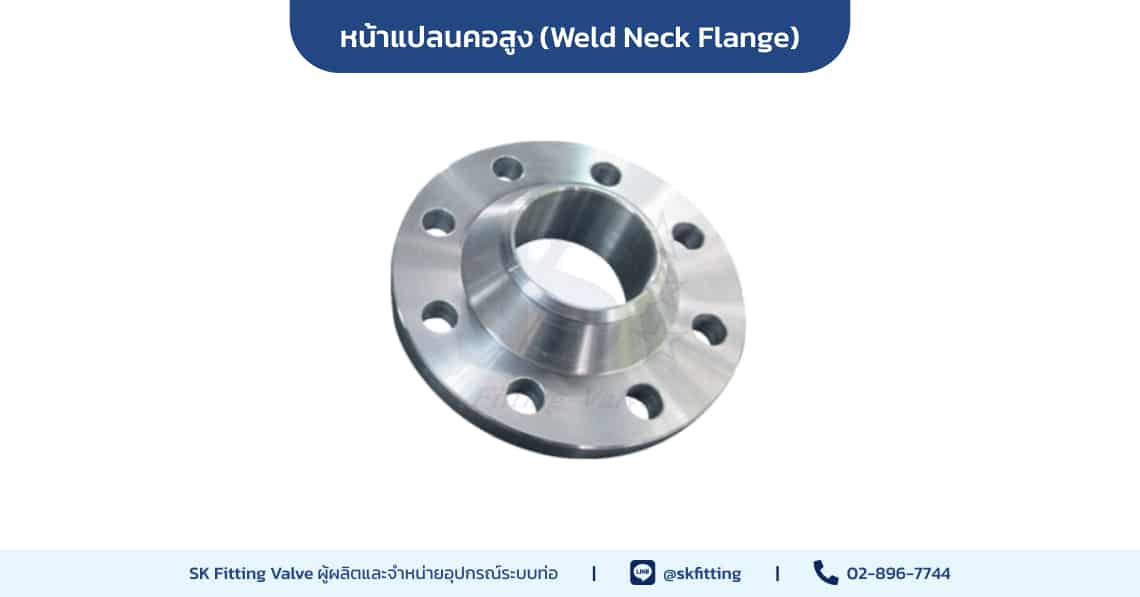
4. Welding Neck Flange (WN Flg.)
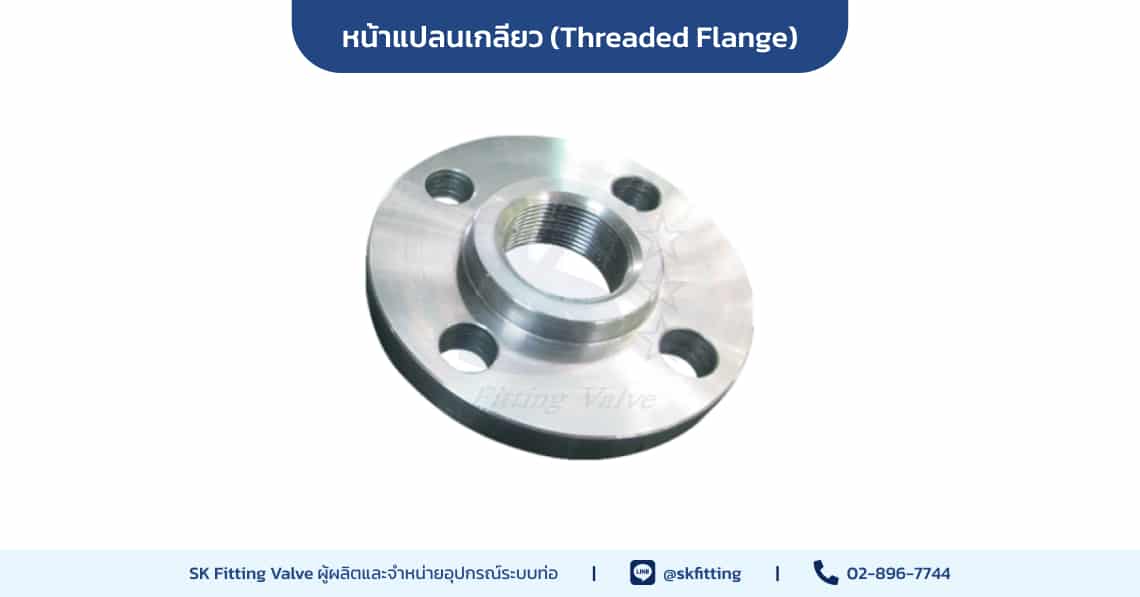
Welding neck flanges are designed to transfer stress from the flange to the pipe through a reinforced neck section. This reduces the risk of cracking at the weld joint, which may occur in socket weld and slip-on flanges. Due to this special design, this type of flange is more expensive than other flange types.
This flange is commonly used for large pipe sizes. Installation is performed using butt welding, allowing weld integrity to be inspected by radiographic testing.
The thickness of the welding neck should match the pipe thickness. For example, a SCH 40 pipe should be used with a SCH 40 welding neck flange.
5. Lap Joint Flange
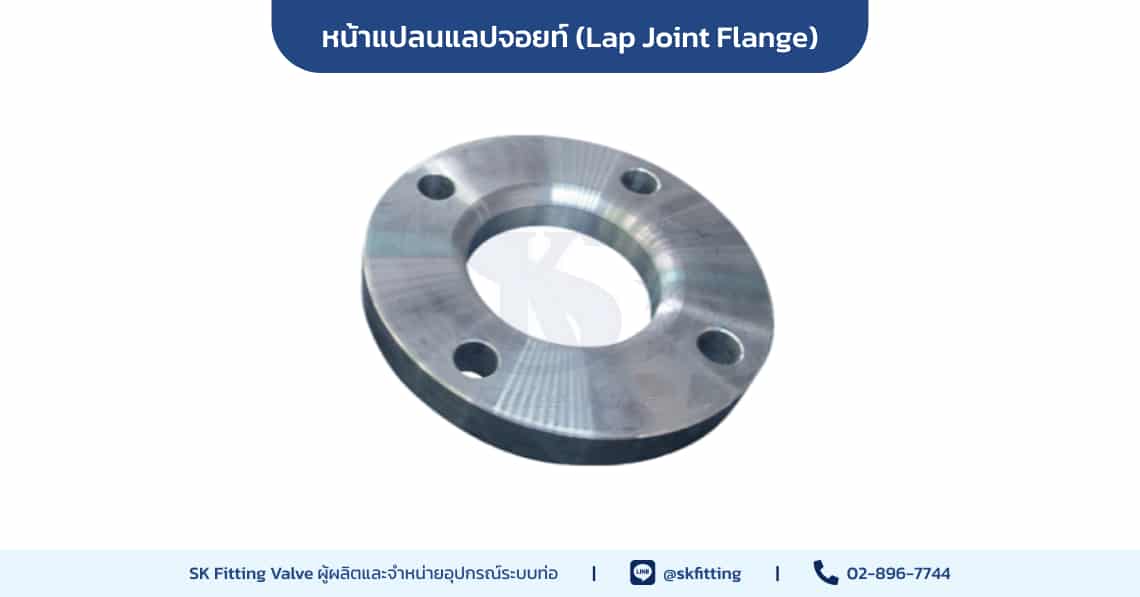
A lap joint flange consists of two parts: the lap joint flange and the stub end. The lap joint flange is used together with a stub end. The lap joint flange is slipped over the stub end, and the stub end is then butt welded to the pipe. With this design, the flange can rotate freely around the pipe, which helps reduce bolt hole misalignment and minimizes stress caused by pipe misalignment.
Because the lap joint flange and stub end are separate components, it allows more economical material selection. For example, if the pipe material is stainless steel grade 316, the stub end can be made from the same material while the lap joint flange can be made from carbon steel. However, galvanic corrosion protection must be considered.
6. Blind Flange
A blind flange has no bore opening for pipe connection. It is used to close the end of a piping system or seal pressure vessel nozzles for various purposes such as hydrostatic pressure testing.